

Tailoring has long represented more than just a style—it’s a statement. Once reserved for aristocrats and elite men in the 18th and 19th centuries, tailored garments like structured jackets and coats were symbols of prestige, power, and social standing (Ribeiro, Dress and Morality, 1986).

Source: google
In the 20th century, tailoring broke gender boundaries thanks to pioneering designers like Coco Chanel, who introduced soft, feminine suits for women, and Yves Saint Laurent, whose 1966 “Le Smoking” tuxedo redefined women’s fashion. These pieces became icons of gender expression and equality (Troy, Coco Chanel: The Legend and the Life, 2010).
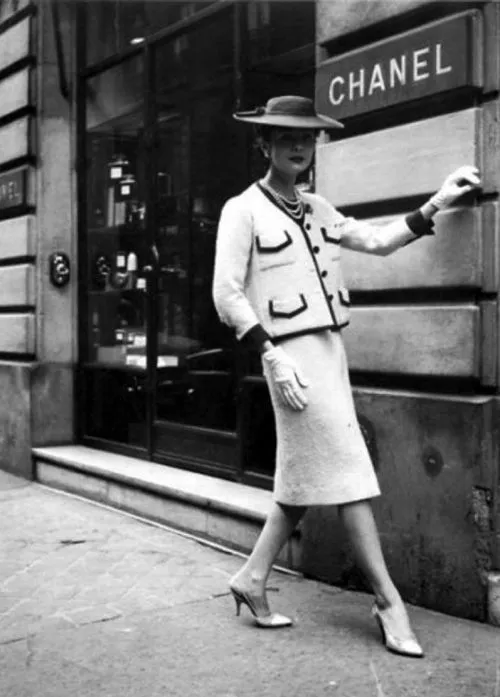
Source: google
Fast forward to today, and tailored clothing has seamlessly merged with streetwear and lifestyle fashion. Designers like Michael Kors have embraced this shift. His Fall/Winter 2025 collection showcased relaxed tailoring that he dubbed “throwaway chic”—effortless, sensual, and mobile. Blending wool coats, silk blouses, and leather with casual ease, Kors reimagines tailoring for modern sensibilities (Vogue, 2025).

Despite its evolution, tailoring remains timeless. From its aristocratic roots to its place on city streets, the tailored suit has continuously adapted to reflect society’s changing values—remaining a constant symbol of structure, sophistication, and quiet confidence.
Share to:
